
BICSI Beyond 2026: Conference Highlights, BICSI's Impact, and What's Ahead for 2027

This week the structured cabling world is in Las Vegas. BICSI Beyond 2026—the event BICSI members knew for years as the Fall Conference & Exhibition—runs August 30 through September 2 at Mandalay Bay under the theme "Systems in Sync: Powering the Connected Future." For anyone who designs, installs, or buys information and communications technology (ICT) infrastructure, it is the week the industry compares notes on where the work is going next.
This article covers three things: the conference highlights worth paying attention to, what BICSI has actually contributed to our industry over the past five decades, and what BICSI has on the calendar for the rest of 2026 and into 2027.
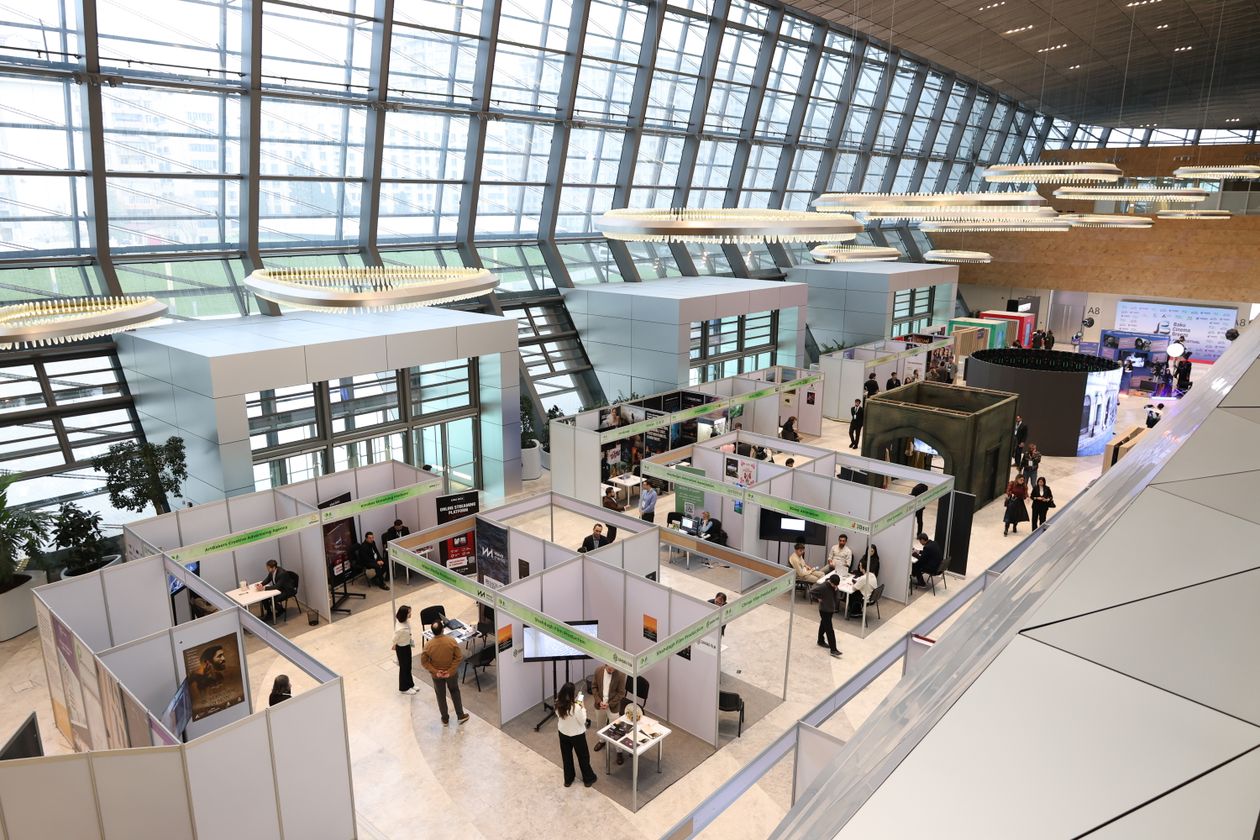
A New Name, the Same Mission
The most visible change this year is the name. BICSI has rebranded its fall event as BICSI Beyond, and the official program frames it plainly: buildings, data centers, campuses, cities, and critical infrastructure are now deeply interconnected, and when technology, skills, and expectations fall out of sync, performance suffers and risk increases. That is a fair description of what most of us see on job sites every week—the low-voltage scope is no longer a standalone trade package. It touches power, mechanical, security, AV, and the owner's IT and OT teams all at once.
The event is built for exactly that cross-section. Beyond the core telecommunications audience, the program explicitly invites professionals from healthcare, manufacturing, AV, security, engineering, and construction.
Conference Highlights: What's on the Program
Keynotes
- Monday, August 31 — Futurist Matthew Griffin, "The Acceleration Curve: Preparing Infrastructure for What's Next."
- Tuesday, September 1 — Former NASA astronaut Mike Massimino, "Being Resilient, Adaptable and Innovating for an Uncharted Future."
- Wednesday, September 2 — Justin Wren, "From the Ring to the Rainforest: Leadership Principles from an Ultimate Fighter's Remarkable Journey."
Data Centers and AI Infrastructure
No surprise here: AI is the gravitational center of this year's technical program. Sessions include "Designing Fiber Infrastructure for AI Driven Data Centers: Density, Speed, and Scalability" and "Powering AI Data Centers with Fault Managed Power," along with a forward-looking session on "zero gravity" data centers and network infrastructure designed for orbit. We have written about the practical side of these topics on this blog—see our pieces on 400G and 800G fabrics for NVIDIA AI clusters and fault-managed power. The fact that both are now mainstream conference tracks tells you how quickly they moved from "emerging" to "specified."
Optical LAN and Fiber Testing
Passive Optical LAN gets real attention this year, with sessions on implementation and use cases and on fast-tracking data-center and IT/OT deployments with Optical LAN. There is also a session on "Testing Today's Fiber Networks: Single-Fiber and Multi-Fiber Systems"—a timely topic as MPO-based links become the default in high-density rooms and test procedures have to keep up.
Wireless
Wi-Fi 7 is on the program from the cabling side, with a session on "Wi-Fi 7 Optimization Through Cabling Infrastructure." This is the right framing: the access point is only as good as the multi-gigabit copper and PoE budget feeding it.
Intelligent Buildings and Healthcare
Building-systems sessions cover Single Pair Ethernet (SPE) in building automation, designing audiovisual systems using the ANSI/BICSI 007 intelligent-building standard, and next-generation smart hospitals. That last topic lines up with BICSI's April 2026 publication of the updated healthcare standard, discussed below.
Education Before the Main Event
Pre-conference masterclasses on August 30–31 include DAS 101, estimation and earned value management, Passive Optical LAN fundamentals, and smart-city infrastructure—the kind of focused, practical training that sends people home able to do something new on Monday morning.
The Social Side
The exhibition opens with a reception on Monday afternoon, The All-American Rejects play a concert on Tuesday evening, and Wednesday's exhibit-hall lunch includes a Women in BICSI and Emerging Professionals meet-and-greet. That last item matters more than it looks. The industry's workforce gap is real, and BICSI has been deliberate about building on-ramps for the next generation of designers and installers.
What BICSI Has Brought to the Industry
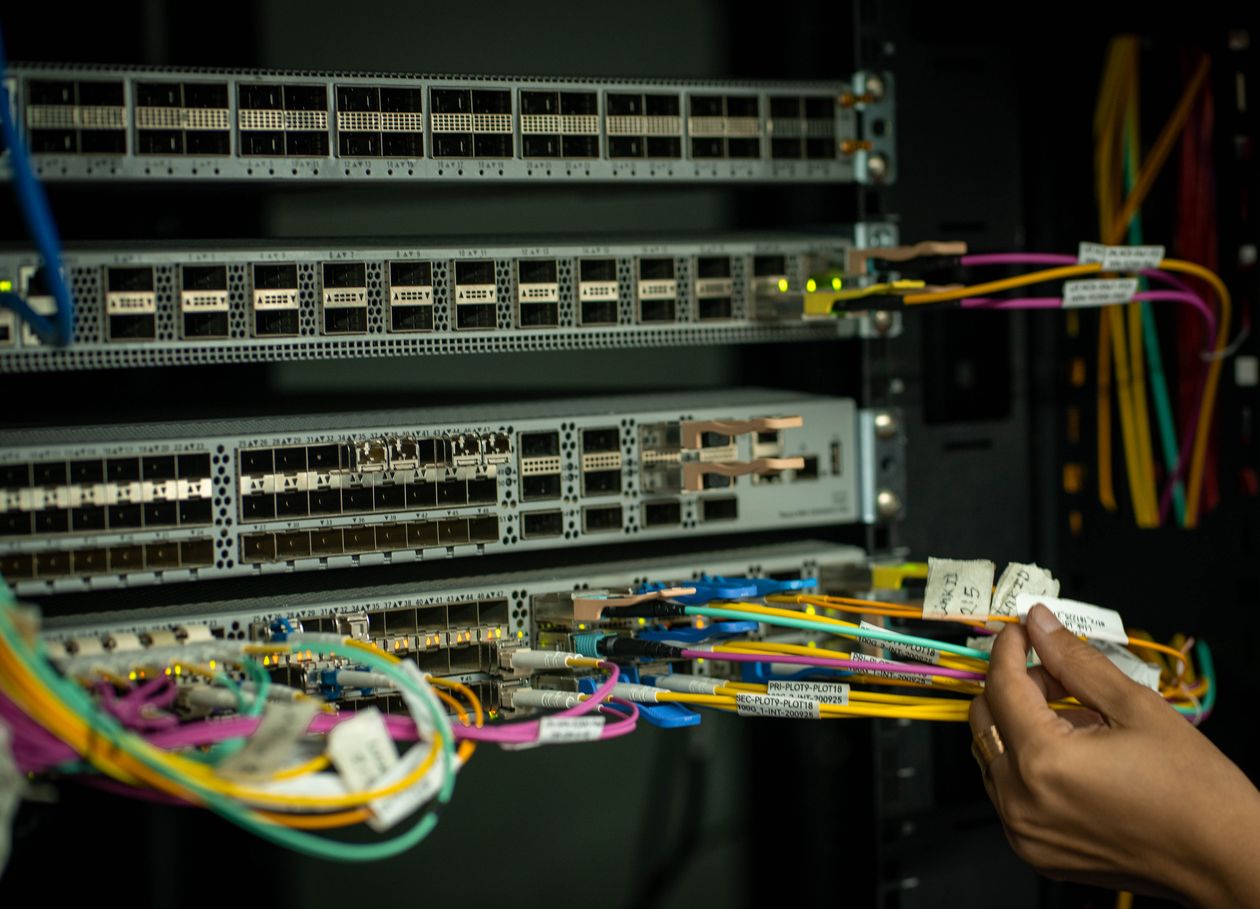
It is easy to treat BICSI as "the organization behind the RCDD." It is considerably more than that. Founded in 1974 and headquartered in Tampa, Florida, BICSI today serves more than 26,000 members and credential holders, with membership spanning nearly 100 countries. Its contribution falls into four areas.
1. A Common Professional Standard for ICT Design
Before credentials like the Registered Communications Distribution Designer (RCDD) were widely recognized, there was no consistent way for an owner, architect, or general contractor to know whether the person designing the telecommunications infrastructure understood pathways, spaces, grounding, and cabling as a system. The RCDD gave the industry that benchmark, and it is now routinely written into specifications and RFPs—particularly on government, healthcare, and education projects. BICSI's credential family has grown well beyond it: installer and technician certifications for copper and fiber, the Data Center Design Consultant (DCDC), Outside Plant (OSP) designer, RTPM project manager, and newer micro-certificates for focused skills.
2. Design Standards That Complement TIA and NEC
Where ANSI/TIA standards define cabling performance and topology, BICSI standards address how to design whole facilities well. The best known is ANSI/BICSI 002, the data center design and implementation best-practices standard, now in its 2024 edition with expanded material on liquid and immersion cooling support. Others cover educational facilities (ANSI/BICSI 001), healthcare (ANSI/BICSI 004), and intelligent buildings (ANSI/BICSI 007). In April 2026 BICSI published ANSI/BICSI 004-2025, its updated healthcare ICT standard, which expands scope to cover convergence across systems, heavier reliance on wireless and connected medical devices, and stronger data-protection requirements.
3. The Design Reference Manuals
BICSI's Telecommunications Distribution Methods Manual (TDMM) is the reference many of us learned the trade from, and it remains the backbone of RCDD preparation. Companion manuals on installation, outside plant, data centers, and wireless give practitioners a shared vocabulary—which is precisely what you want when five trades are coordinating one ceiling space.
4. Continuing Education and Community
BICSI credentials require continuing education credits to maintain, which keeps credential holders current as the technology shifts from Cat 5e to Cat 6A, from 10G to 800G, and from AC distribution to fault-managed power. The conferences, regional ICT Forums, webinars, and the Cabling Skills Challenge all feed that cycle.

What's Planned for the Rest of 2026
BICSI's published calendar after Las Vegas includes:
- BICSI ICT Forum – Southeast — October 8, 2026, Jacksonville, Florida.
- BICSI CALA ICT Summit Puerto Rico Conference & Exhibition — October 28, 2026, San Juan Marriott Resort & Stellaris Casino, San Juan.
- BICSI Virtual ICT Forum — November 5, 2026.
- BICSI Japan Conference & Exhibition — November 17–18, 2026, TODA Hall & Conference, Tokyo.
- A continuing series of BICSI webinars and classroom courses through the end of the year.
On the standards side, BICSI issued a call for participation in its standards workgroups earlier this year. If you have field experience you want reflected in the next editions, joining a workgroup is the most direct way to influence the documents your projects will be specified against.
Looking Ahead to 2027
- BICSI Winter 2027 — February 14–18, 2027, Orange County Convention Center, Orlando, Florida. The call for presenters lists six tracks: AI Transforming Business; AV and Security Integration; Intelligent Infrastructure Advancements; Optimizing Data Centers; Professional, Career, and Business Development; and Wireless Innovations.
- BICSI Beyond 2027 — September 26–29, 2027, MGM Grand, Las Vegas, Nevada.
BICSI has also published dates further out: the 2028 Winter Conference (February 6–10, 2028, Rosen Shingle Creek, Orlando) and BICSI Beyond 2028 (August 27–30, 2028, MGM Grand, Las Vegas). The 2027 Winter tracks are a useful signal of where the industry's attention is going: AI, convergence of AV and security onto the network, and data-center optimization will remain front and center.
Why It Matters for Your Projects
For owners and project teams, the practical takeaway is simple. The topics dominating BICSI's program—AI-density fiber, fault-managed power, Wi-Fi 7 cabling, SPE, Optical LAN, and healthcare convergence—are the same topics showing up in specifications right now. Working with BICSI-credentialed designers and suppliers who follow these standards reduces rework, speeds inspection, and gives you infrastructure that will carry the next generation of equipment rather than the last one.
Heather Technologies helps government and commercial customers source the fiber, copper, connectivity, pathway, and test equipment behind these designs. If you are planning a project around any of the technologies on this year's BICSI program, get in touch with our team.
Todd Taskerud, RCDD/NTS/OSP/WD, is a structured cabling and data-center infrastructure specialist at Heather Technologies.
